-
-
Reddit Lawsuit Challenges AI Training on User Data
Reddit has initiated legal proceedings against companies alleged to have scraped user-generated data from its platform without authorization. The lawsuit centers on the use of Reddit’s publicly accessible content to train large language models (LLMs), which Reddit claims violates its API terms of service and intellectual property rights. Reddit revised its API terms in 2023,…
-
EU Launches Powerful New Cyber Blueprint to Tackle Crisis Threats
The European Union has officially adopted the Cyber Blueprint, a new framework to coordinate cybersecurity crisis response across Member States. This move comes amid growing concern over ransomware, supply chain attacks, and threats to critical infrastructure, all of which demand fast, collective action at both national and international levels. What is the Cyber Blueprint? The Cyber…
-
-
Canada | Guidelines | News
2025 Cyber Threat Report: How AI Is Targeting Canadian Democracy
The Communications Security Establishment (CSE) has released its 2025 update on cyber threats to Canada’s democratic process, highlighting the increasing use of artificial intelligence (AI) by hostile actors to interfere with elections and democratic institutions. Key Findings: Implications for Canada: While the report assesses that it is very unlikely (10–30% chance) that AI-enabled cyber activities…
-
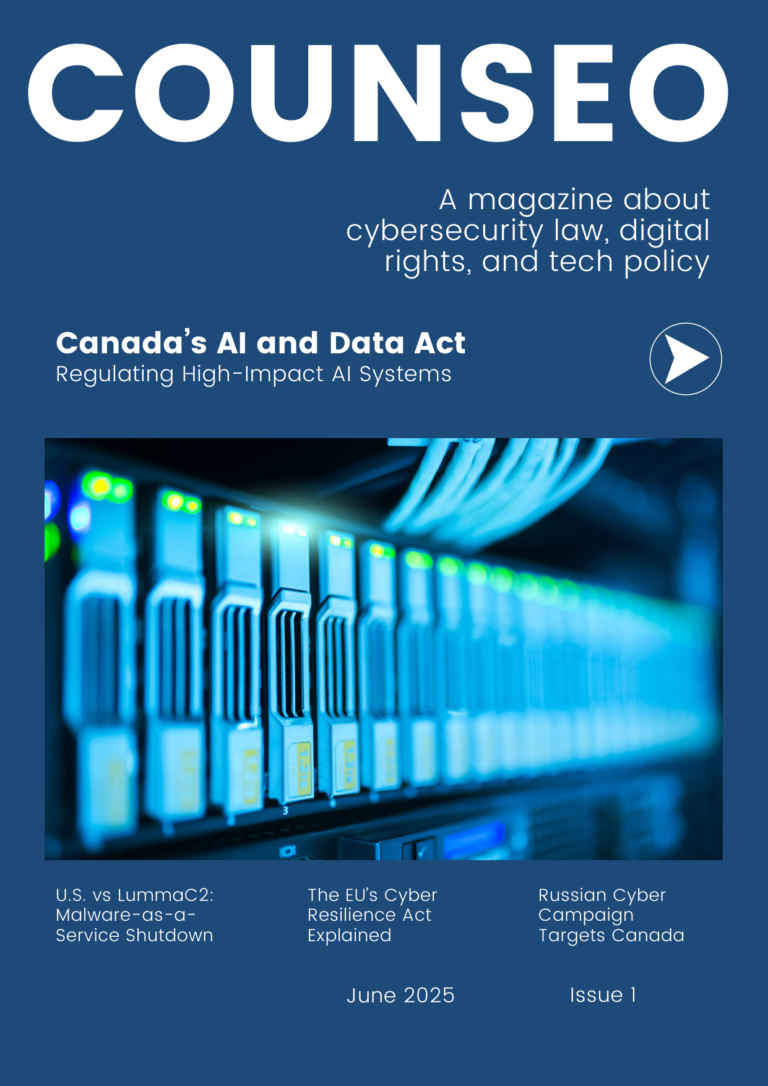
Canada’s Big Move on AI: What You Need to Know About AIDA
What Is AIDA? The Artificial Intelligence and Data Act (AIDA) is Canada’s first national framework aimed at regulating the design, development, and deployment of high-impact AI systems — technologies that could influence human rights, safety, economic opportunity, and public trust. Introduced in Bill C-27 (the Digital Charter Implementation Act, 2022), AIDA marks a pivotal moment in Canadian tech policy. It aims…
-
Canada and UK Collaborate on Software Security Standards for Vendors
The Canadian Centre for Cyber Security partnered with the UK’s National Cyber Security Centre (NCSC-UK) and the Department for Science, Innovation and Technology (DSIT) to release a joint Software Security Code of Practice and supporting guidance for software vendors. This initiative addresses growing concerns around software supply chain attacks and vulnerabilities caused by weak development or maintenance…
-
Canada’s 2025 Election Faces New AI Cybersecurity Threats
The Communications Security Establishment (CSE) has published its 2025 update on cyber threats to Canada’s democratic system, revealing that foreign actors are increasingly using artificial intelligence (AI) to disrupt elections around the world—including in Canada. The report, titled Cyber Threats to Canada’s Democratic Process: 2025 Update, outlines how the growing accessibility and power of AI tools…
-
Protecting Digital Media: New Global Guidelines for AI-Era Security
The Canadian Centre for Cyber Security (Cyber Centre), alongside the U.S. National Security Agency (NSA) and international partners, has released new cybersecurity guidance addressing content credentials and the integrity of multimedia in the era of generative artificial intelligence (AI). This collaboration includes: With the rise of AI-generated content, threat actors can easily manipulate media, making it harder to distinguish between authentic and altered content….
-
EU Backs New Disinformation Code to Strengthen Digital Safety
The European Commission and the European Board for Digital Services have officially endorsed the integration of the voluntary Code of Practice on Disinformation into the Digital Services Act (DSA) framework. This move establishes the Code as a key benchmark for assessing platform compliance with the DSA. In January 2025, signatories of the Code—including Very Large Online Platforms and Search Engines (VLOPs & VLOSEs) such as Google, Meta, Microsoft, and…
News
In an increasingly digital world, cyberlaw has become a critical concern for individuals, businesses, and governments alike. Every day, new legal challenges and regulatory changes emerge, along with innovative solutions to address these issues. Staying informed about the latest developments in cyberlaw is essential to protect sensitive information, maintain privacy, and ensure compliance with digital regulations.
Our Cyberlaw News page is your go-to source for the most up-to-date information on cyber regulations, legal cases, data protection laws, and technological advancements. We provide comprehensive coverage of the latest news, expert insights, and practical advice to help you navigate the complex landscape of cyberlaw. Whether you’re a legal professional, a business leader, or simply someone interested in the field, our news updates will keep you informed and prepared in the ever-evolving world of digital law and regulation.